
What to Wear for a Phu Quoc Photoshoot
Choose clothes, colours and footwear for a Phu Quoc photoshoot, with practical ideas for men, couples, families and different settings.
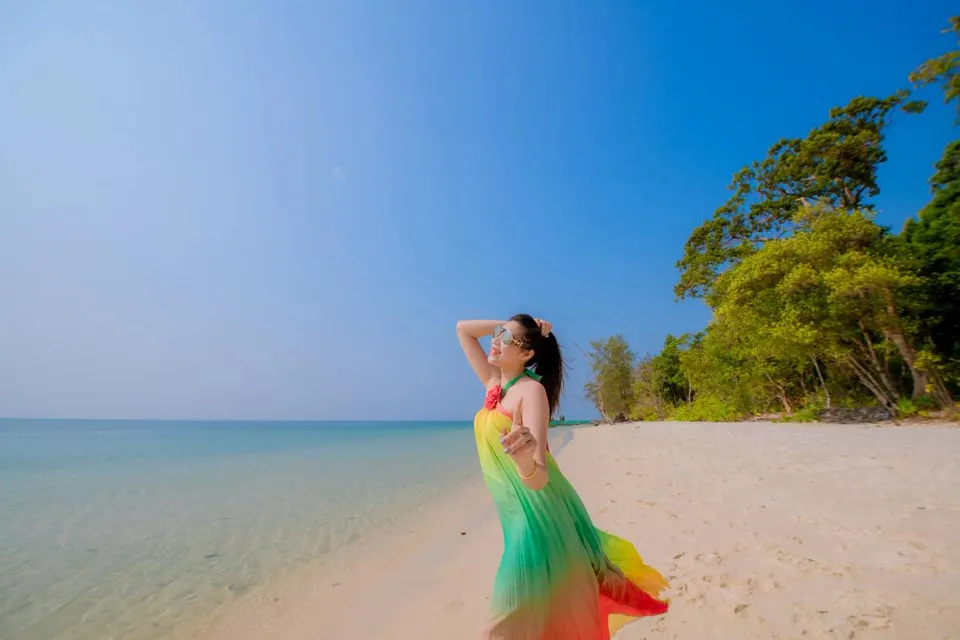
Start with an outfit you can move in and a setting you actually want to use. Clothes that feel comfortable standing in a hotel room can behave differently during a walk, a seated portrait or a breezy beach session. Test those movements before packing rather than choosing only from a still reference photograph.
There is no compulsory island colour palette. A strong print, a plain shirt or a dark dress can each work when the clothing and background make sense together. Use the examples here to discuss preferences, then agree any outfit changes and location arrangements with your photographer.
Ready to compare the work and session options? Explore our Phu Quoc photographer page, then use this guide to prepare your questions.
Choose the setting before the second outfit
For an open beach, consider how the fabric moves and how much attention you want the clothes to attract. A vivid dress can be the main colour against sand and water. A quieter outfit can give expressions more prominence. Neither choice requires everyone to wear white.
In streets with colourful buildings, check whether the print and background compete. Send one outfit photograph alongside a location reference. The patterned street portrait illustrates a deliberate combination of colour and architecture; it does not establish access to the same place for another booking.
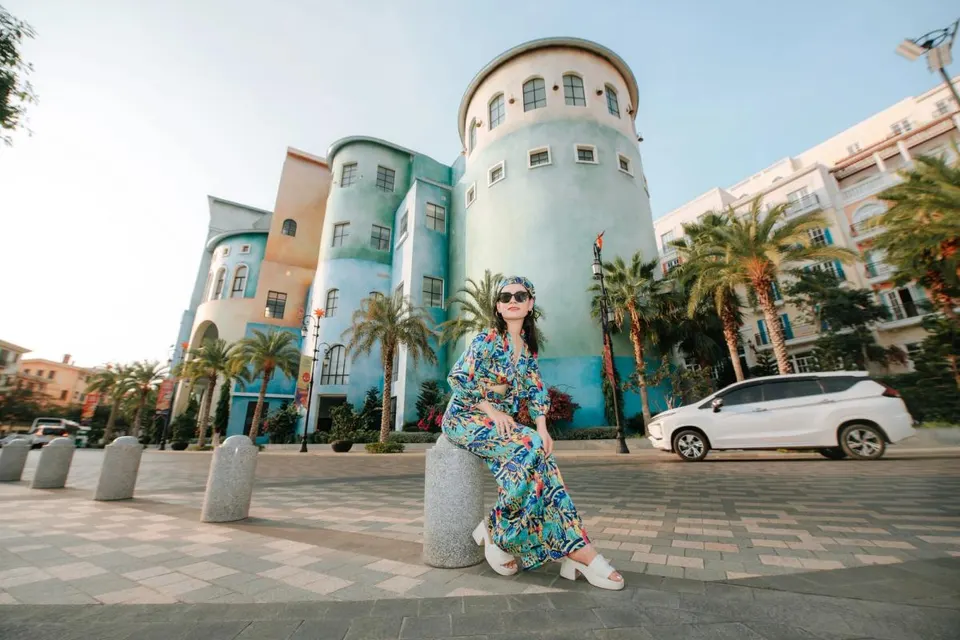
Test walking, sitting and the wind
Try sitting in the outfit, taking a normal stride and raising your arms. Check straps, fastenings and any layer that needs repeated adjustment. If the session involves a child, choose clothes they can play and rest in without constant correction.
A flowing skirt or scarf can add movement, but it should not pull you toward water, steps or a ledge. Keep accessories manageable and discuss a stable alternative to any reference pose. Pack a small bag for belongings rather than leaving valuables unattended between photographs.
A practical starting point for men
Start with a shirt or top that fits comfortably across the shoulders and trousers or shorts suited to the setting. A plain top is a useful option when you want the face to lead the frame. Choose a print because you like it, not because every beach photograph must follow a theme.
Check the outfit in daylight for transparency, creases and visible pocket contents. Remove items that make the silhouette uneven before shooting. Bring a spare top if you expect to be uncomfortable in the heat, and discuss whether changing fits the agreed session time.
Coordinate without making everyone identical
Choose one person’s outfit as a starting point, then repeat a small number of colours across the group. Compare the actual clothes together rather than separate shopping pictures. Different shades and textures can feel connected without matching every garment.
Keep the youngest or least comfortable participant in mind. A child who dislikes a stiff collar or an adult who needs supportive shoes should not be asked to sacrifice comfort for a colour scheme. Share the group’s combinations in advance and keep a familiar backup for children.
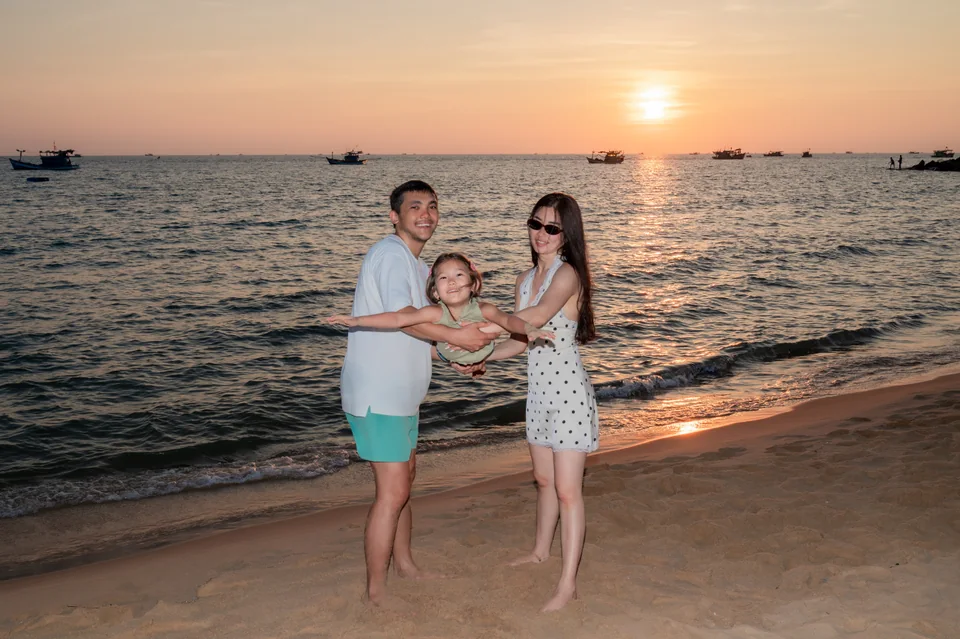
Choose shoes for the route, not just the frame
Ask whether the route includes sand, paved streets, stairs or longer transfers on foot. Choose a pair you have already walked in. If you want different shoes for a portrait, carry them and agree a suitable place to change. Bare feet are a personal option on an assessed surface, not an instruction to enter the water.
A dark outfit against warm architecture, as in the portrait below, can work without making light-coloured beach clothes the only option. The photographed ledge is not a recommended route or a pose to copy. Stay with positions that work for your balance, clothing and the current access conditions.
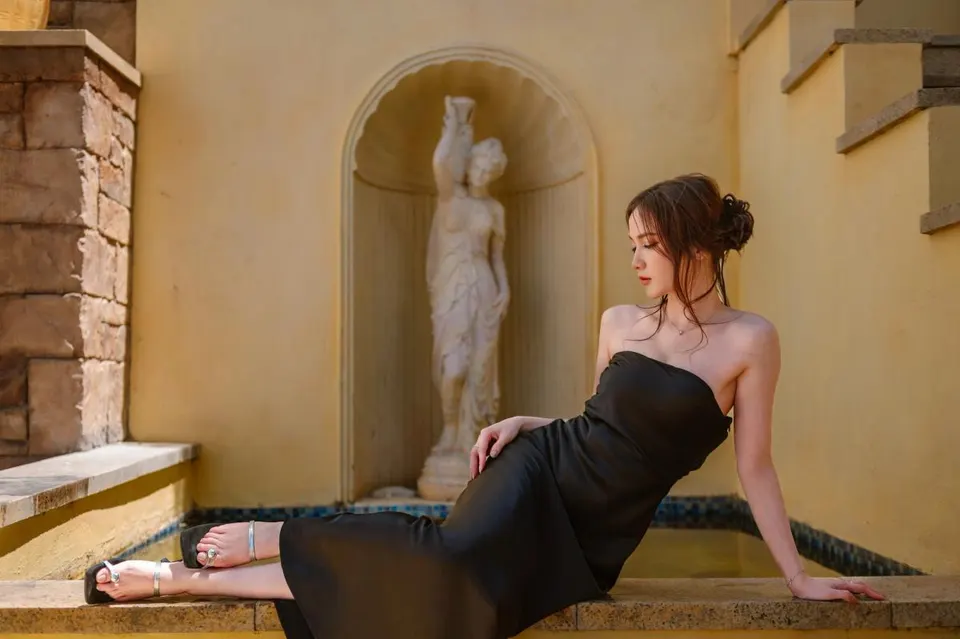
Send a small, useful outfit brief
Send the group size, preferred setting and photographs of the clothes you already own. Mention walking needs, any garment you do not want to wear and whether you would like seated portraits. That is more useful than asking for a universal list of outfits for the whole island.
Pack water, personal essentials, a small towel and only the accessories you intend to use. Agree the number of changes, changing privacy and how belongings are handled before the session. Styling, makeup, outfit rental and venue facilities should be included only when specifically confirmed in your arrangements.
Try the decision with a planning example
Imagine choosing between a strong print and a plain shirt for a colourful street. Put each outfit beside a reference of the intended background, then try sitting and walking in it. The question is how the whole frame and the person work together, not which item is universally best. For a family, let the least comfortable participant’s practical needs inform the shared palette. Changing outfits only helps when permission, time and belongings are manageable.
| Choice | Useful question |
|---|---|
| Colour and print | What should attract attention in the frame? |
| Fit and fabric | Can you sit and move without repeated adjustment? |
| Shoes and changes | Do the real route and approved changing arrangements work? |
Research and references
Reference titles are shown in their original language.