
Natural Posing Ideas for a Phu Quoc Photoshoot
Practical posing prompts for individuals, couples and families in Phu Quoc, with comfortable alternatives and real portrait examples.
You do not need a catalogue of poses to take to a holiday session. A useful starting point is one action you can repeat comfortably: take a few steps, turn toward someone or rest your hands in a familiar position. Small variations give the photographer room to work without asking you to hold a complicated shape.
The photographs in this guide illustrate visible positions and interactions. They do not document the exact instructions used during the original sessions. Use the prompts as options to discuss, and tell your photographer what feels uncomfortable, tiring or too personal before trying it.
Ready to compare the work and session options? Explore our Phu Quoc photographer page, then use this guide to prepare your questions.
Begin with a comfortable still portrait
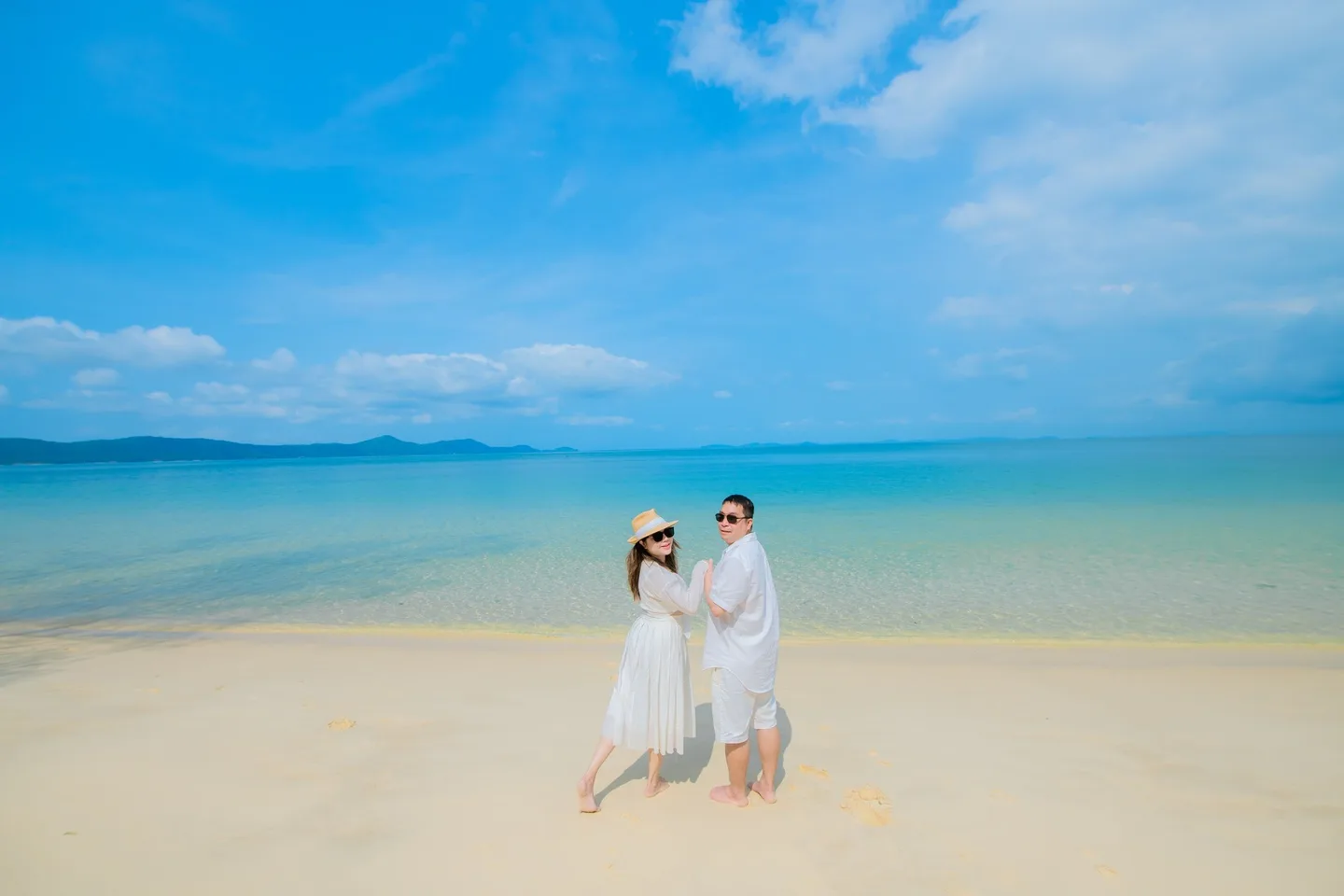
Choose stable ground and stand in the way you normally feel balanced. Let your arms rest before deciding what to do with your hands. Holding a hat, loosely joining your hands or leaving one hand by your side can be easier than maintaining an unfamiliar arrangement.
Ask for a simple sequence: look toward the photographer, look toward the setting, then make a small turn. If standing is tiring, request a seated or supported alternative. The aim is a comfortable expression and a clear connection to the scene, not a required body shape.
Use a short walk instead of a long performance
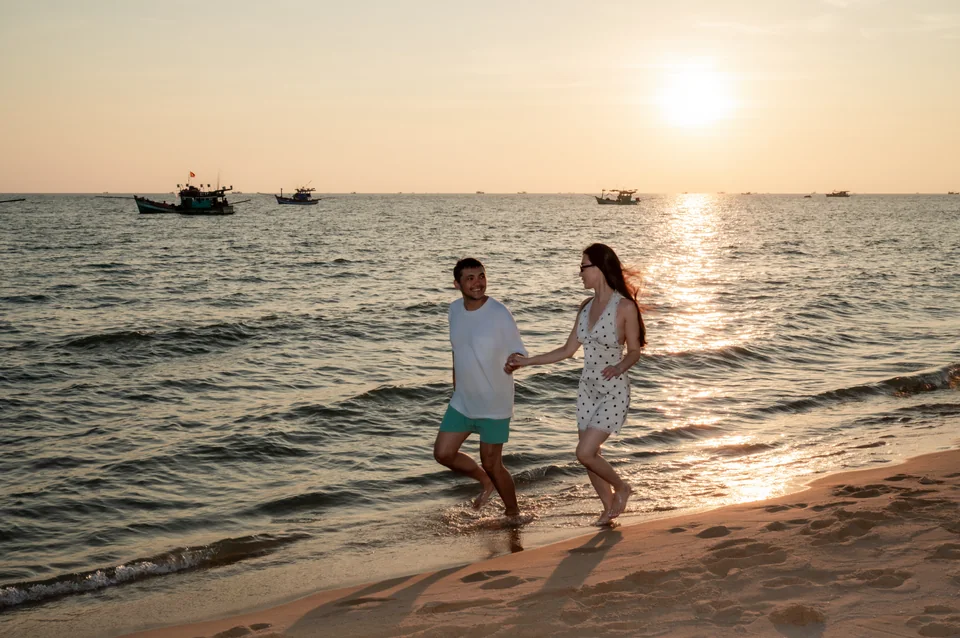
Pick a short, unobstructed route together. Walk at a normal pace, pause and repeat only if it feels comfortable. Look where you are going before turning toward the camera. Let the photographer work around the action rather than asking you to walk backwards near water or steps.
For a couple, walking side by side or turning to speak can create different expressions within the same small area. A movement prompt should fit your clothing and footwear. Stop to adjust a slipping strap or uncomfortable shoe rather than trying to hide it through another series.
Give couples an interaction, not a compulsory kiss
Try facing each other, sharing a brief conversation or taking one slow turning step if both people want to. Discuss touch and intimacy before the photographer directs it. A quiet portrait with space between you can be as meaningful as an embrace.
The opening couple photograph shows joined hands and a short walking movement beside the sea. It is a visual reference, not an instruction to enter the water. Choose a dry, stable route and pause or use a standing portrait if balance, access or comfort changes the plan.
Let the setting support the frame
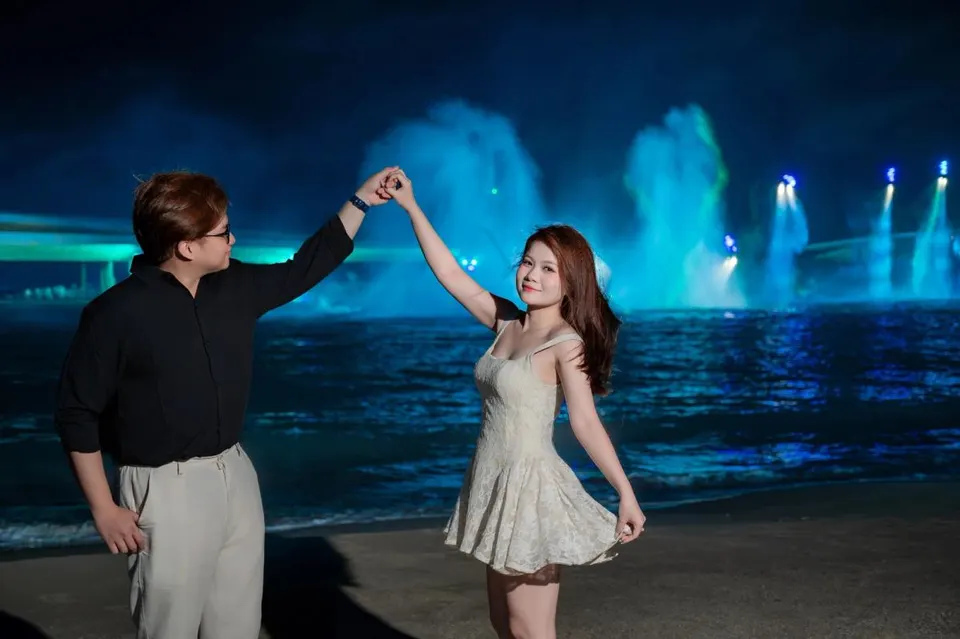
A doorway, repeated architectural line or illuminated background can give a portrait structure. Ask which part of the view matters before changing position. Stay within the permitted area and avoid climbing on a barrier or moving toward water to reproduce a reference.
In the evening portrait, joined raised hands give the couple a shared point of attention while blue fountains remain behind them. Notice the simple interaction rather than assuming that fast movement, the same lighting or the background programme will be available. The current route, permission and conditions need a separate check.
Keep family prompts short and optional
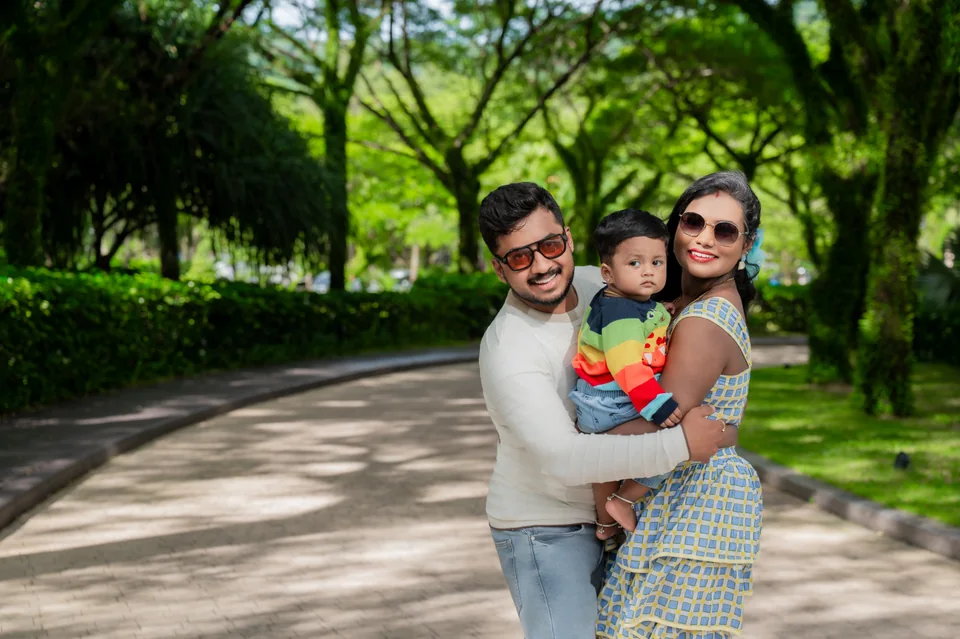
Agree one clear photograph of the whole group before adding playful variations. For example, everyone can look toward one person, share a small wave or stand in the combinations that matter to the family. A child does not need to smile on command for every frame.
The photograph below groups two adults and a child closely so that their faces stay together in the frame. Holding a child is a choice, not a required pose. Offer standing or seated arrangements on stable ground in a permitted space away from vehicle traffic, keep an adult responsible for children and pause when someone needs water, shade or a quieter moment.
Tell the photographer how you want to be guided
Send a few references and explain the visible feature you like: movement, a closer portrait, space around the group or less direct eye contact. Also share any mobility needs, touch boundaries and poses you do not want. That helps the photographer prepare options without promising identical results.
If a direction is unclear, ask for one adjustment at a time. Take a break before discomfort affects the whole session. A useful plan leaves room for conversation and a small number of priorities rather than a checklist of every pose found online.
Try the decision with a planning example
Suppose one person enjoys movement while the other prefers standing still. They can hold hands and look toward each other without turning or dancing. Start from the shared comfortable option, then change one element if both want to. If someone needs to sit, use a suitable permitted place instead of asking them to copy another person’s height. This is a planning example, not a description of how the reference photographs were directed.
| Choice | Useful question |
|---|---|
| Solo portrait | Would a changed gaze be enough? |
| Couple portrait | Which interaction feels comfortable for both? |
| Family portrait | Can everyone participate without forced gestures? |
Research and references
Reference titles are shown in their original language.