
How to Book a Holiday Photoshoot in Phu Quoc
Choose a photographer, compare what is included and plan a session that fits your trip, with real photographs to help you ask better questions.
A holiday photoshoot starts with a simple wish: to come home with photographs that include you and the people you travelled with. Choosing the session becomes easier when you separate three decisions: what you want to remember, where the photographs will happen and what you will receive afterwards.
This guide helps you prepare those decisions before requesting a quote. You do not need to arrive with a complete itinerary or a list of poses. A few clear preferences give the photographer a useful starting point and help you compare offers without relying on a package name alone.
Ready to compare the work and session options? Explore our Phu Quoc photographer page, then use this guide to prepare your questions.
Start with the occasion and the people
Think about the photographs that would matter after the holiday. A couple might want portraits together; friends may want a shared memory of the trip; a family may need a mixture of everyone together and smaller combinations. Write down the two or three priorities you would most regret missing.
Then distinguish a portrait session from coverage of something happening. A relaxed walk with a photographer is a different brief from following a birthday programme or coordinating a surprise proposal. Tell the team about the occasion before choosing a service so that the plan includes the coordination you actually need.
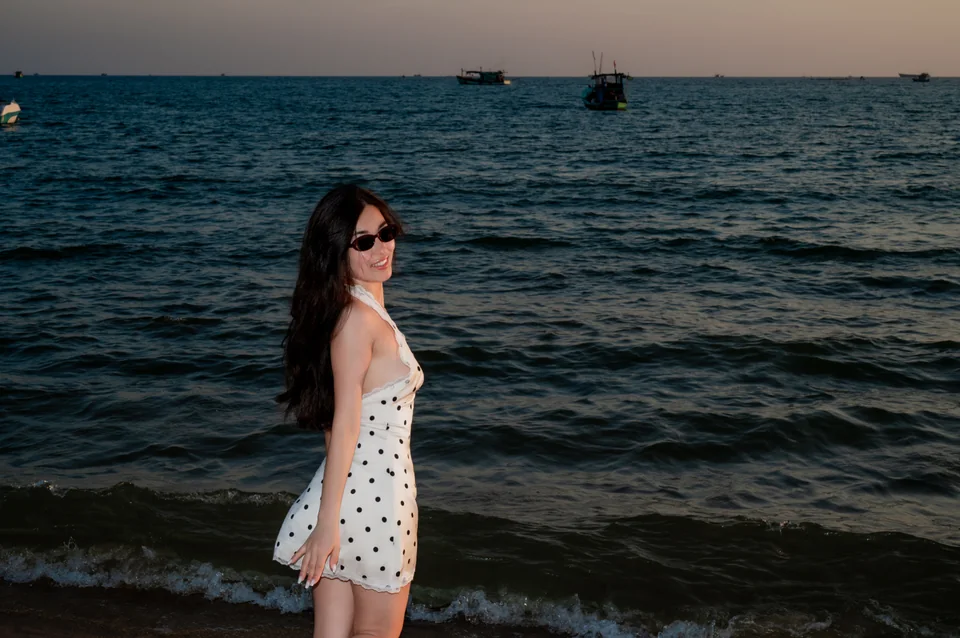
The opening seaside portrait shows one person against the water and boats. Use it to explain the setting and framing you like. A reference is most useful when you can name the part you want to keep, such as the sea in the background, a closer portrait or space around the person.
Look beyond one favourite photograph
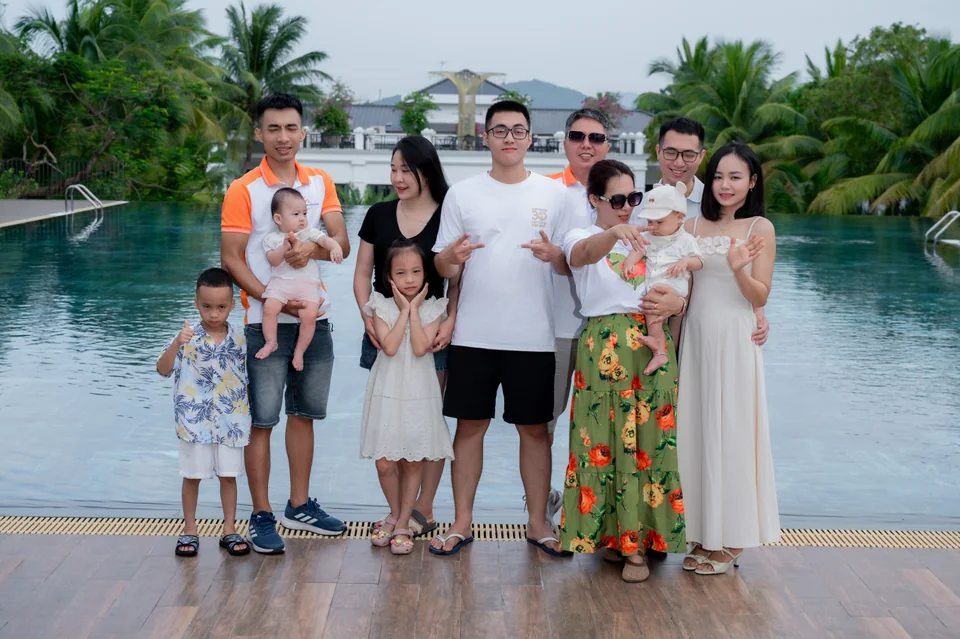
A striking hero image can help you recognize a style, but it cannot show the whole experience. Look for photographs relevant to your group: a couple gallery will not answer every question about photographing a large family. When possible, ask to see a connected selection rather than relying only on highlights from different sessions.
Compare the variety within that selection. Are there wider photographs showing the setting as well as closer portraits? Do the colours and editing feel consistent? Can you see the combinations you would want for your own group? Notice what you like and send a few examples with a short explanation of why they appeal to you.
Use references to communicate preferences, not to request a guaranteed copy. Light, access, people and conditions change. A useful brief might say that you like photographs with movement and a sense of place, while also asking for one clear portrait of everyone together.
Choose a setting that fits the day
Start with where you are staying and how much travelling or walking your group wants to do. One suitable setting can leave more time for photographs than a list of distant stops. If several places matter, ask how movement between them will fit within the proposed session.
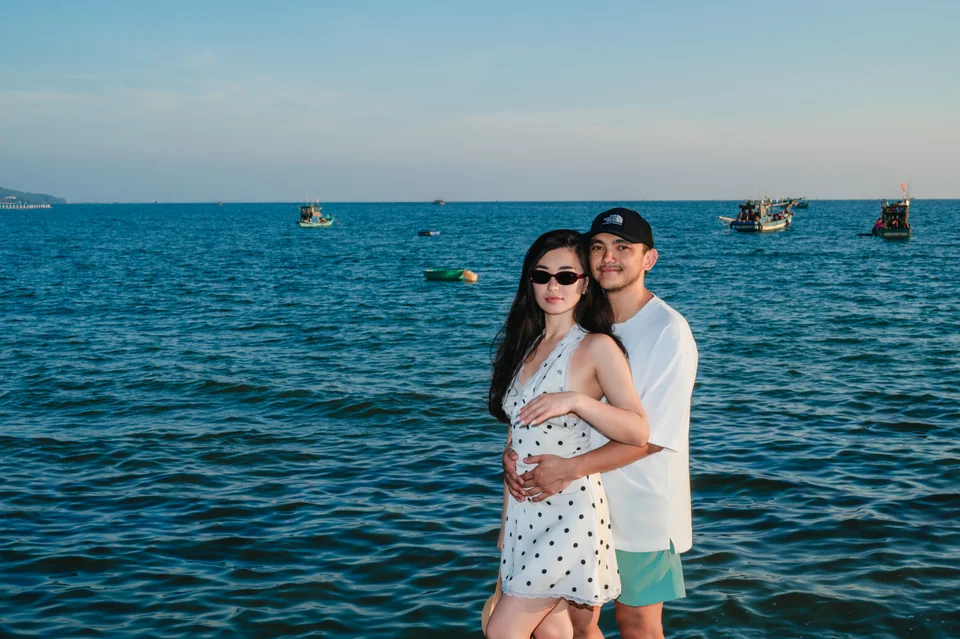
The couple photograph below has a distinctive boat setting. That setting also raises practical questions: who arranges access, what transport is needed and whether those arrangements are included. Treat an attractive location as something to plan, rather than evidence of what a photography quote contains.
Resort spaces, boats, organized setups and managed attractions may require separate permission or payment. Confirm the arrangements for your proposed date. Location guides can help you compare the atmosphere of different places, but the final choice still needs to work for your group and itinerary.
Compare the full offer, not just the price
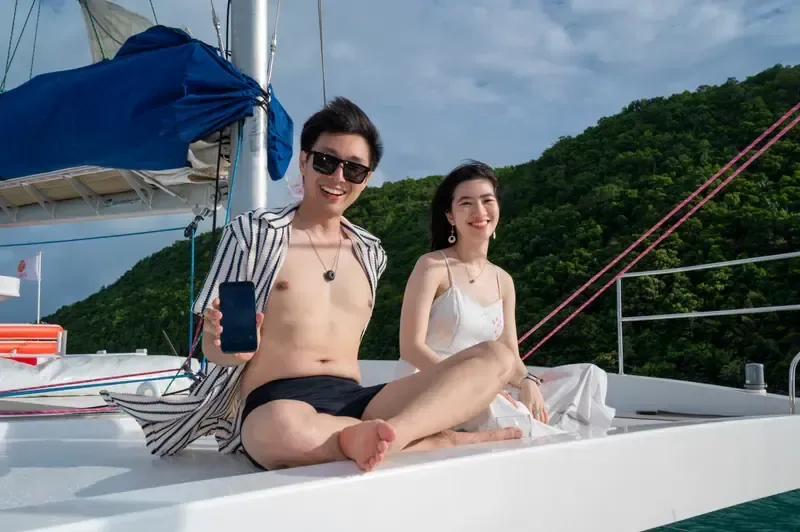
Two quotes can look similar while describing different sessions. Before deciding, put the main details side by side. A longer session is not automatically the better fit: the useful question is whether the time, places and finished photographs match your priorities.
If a detail is missing, ask for it in writing. Before accepting a holiday photography offer, ask the team to record the proposed duration, edited selection and delivery arrangement. Use those agreed details to compare the offer; this guide does not set a package, price or turnaround.
| Detail to compare | Question to ask |
|---|---|
| Time and route | How much photography time is proposed, and how are travel, breaks and outfit changes counted? |
| Finished photographs | How many edited images, or what selection basis, is included? Who chooses them? |
| Editing | What editing is included, and which requests would be additional? |
| Delivery | What files will I receive, how will I receive them and what date is agreed? |
| Total cost | Are transport, entry, venue permission or other arrangements included or excluded? |
| Use and privacy | What personal use is allowed, and how is any portfolio permission handled? |
Test each offer against the same short brief
Write your own request once, then use it when comparing proposals. Include the people, accommodation area, available dates, preferred setting and the photographs that matter most. Keep essential needs separate from optional ideas. This reduces the chance of comparing a simple portrait session with an offer that also includes travel or a more involved occasion.
For example, a request might ask for one everyone-together portrait and a few smaller combinations at one accessible setting, while leaving the photographer to advise on timing. It should also say when the group must leave for its next commitment. This is an illustrative way to brief the work, not a client story or a suggested package.
Check whether the response answers that request. If access is still uncertain, ask who will confirm it. If the selection or delivery is unclear, resolve that before deciding. A proposal that makes an unresolved dependency visible is easier to assess than one whose attractive headline leaves the practical work unexplained.
Know what confirms your date
An inquiry lets you discuss availability; it does not reserve a date. Before paying, check the written confirmation and the booking conditions, including any initial payment and the remaining payment stages. Keep the agreed version so that the date, meeting point and expectations are easy to find.
Ask about changes while your travel plans are still being organized. Explain whether your dates are fixed or flexible, and discuss the weather arrangement for the session. A different time, place or date may be possible, but access and availability still matter. Do not assume a particular refund or free change without checking the terms.
The booking and image-use pages contain the fuller conditions. Read them with your proposed session in mind and raise anything unclear before confirming.
Send a short brief the photographer can use
You can begin the conversation before every detail is settled. Share what you know and identify the decisions where you would like help. Your accommodation area is useful even if you have not chosen a photography location.
If children or several generations are joining, include the group information early. It can affect the route, pace and priority photographs. The family planning guide explains those choices in more detail.
- Travel dates, preferred date and whether the date can move.
- Number of participants, children’s ages if relevant and any access needs.
- Accommodation area and a preferred setting, if you have one.
- Two or three priority photographs and a few useful references.
- Any fixed itinerary commitments or a date by which you need the photographs.
Try the decision with a planning example
Suppose three people want photographs together near their hotel and one person needs the files before leaving. Keep that same brief when comparing offers. Ask how the selection deadline affects delivery rather than assuming the fastest advertised turnaround covers your dates. If a second location appears in a proposal, ask what it contributes and how it changes time and cost. This is an illustration, not a package or a verified client case.
| Choice | Useful question |
|---|---|
| Same people and location | Are quotes based on the same brief? |
| An earlier delivery request | Who confirms the feasible date and selection dependency? |
| An extra stop | What priority does it serve, and what changes? |
Research and references
Reference titles are shown in their original language.