
What Happens If It Rains on Your Phu Quoc Photoshoot?
Agree how to review conditions, contact the photographer and choose a realistic alternative that fits your holiday and written booking.
Rain on the forecast does not answer every question about a photoshoot. You still need to know what conditions mean for the chosen place, whether another arrangement suits the photographs you want, and how a change fits around your travel. The useful preparation is an agreed way to make those decisions together.
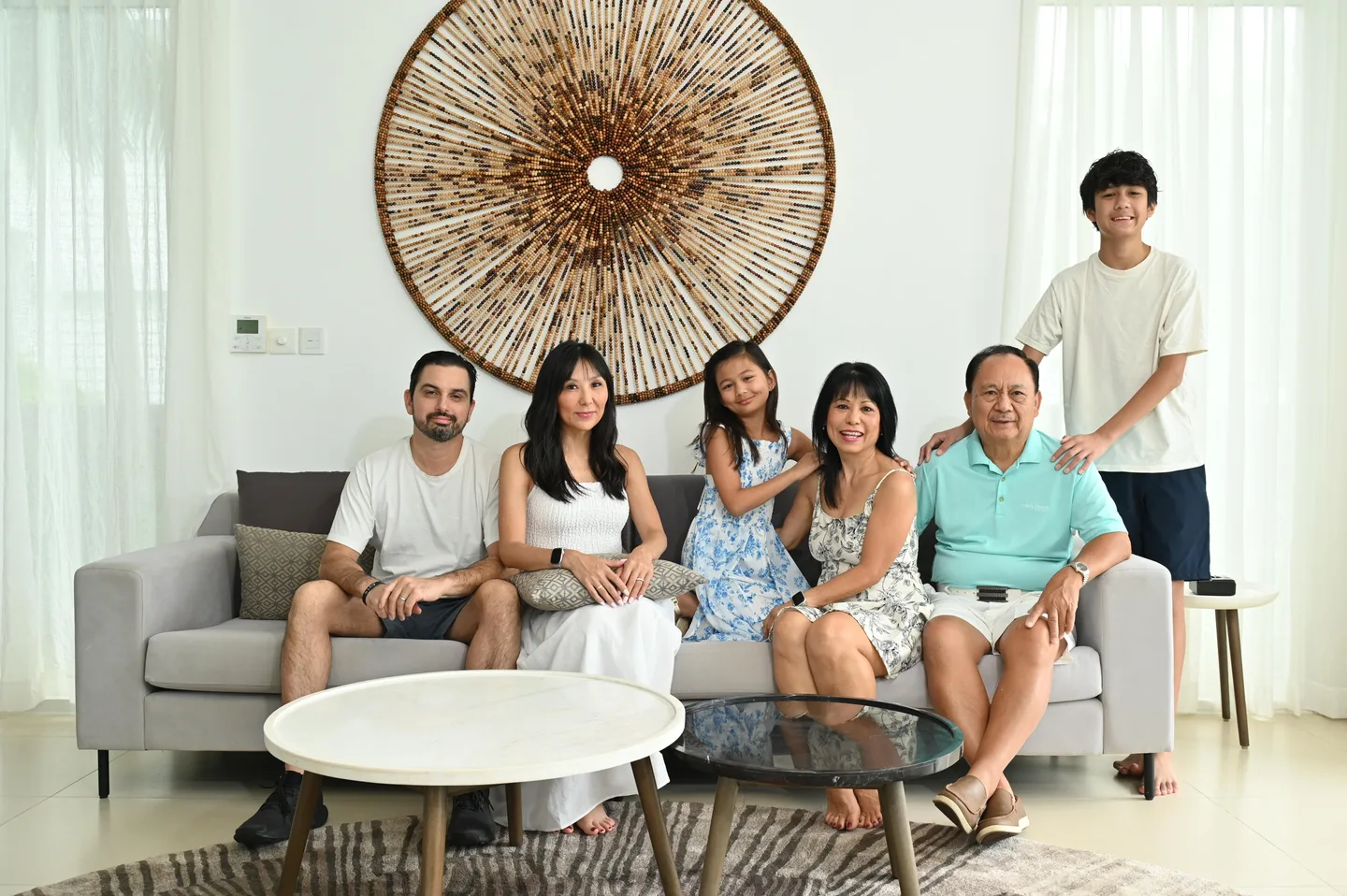
This guide helps you discuss that plan before confirming a holiday session. The real portraits show coastal and indoor settings, but they are not a documented rain-affected booking. In particular, the indoor family photograph is a setting reference, not proof that this room can be offered as your backup location.
Ready to compare the work and session options? Explore our Phu Quoc photographer page, then use this guide to prepare your questions.
Separate the photographs you want from the conditions they depend on
Explain what matters about the setting. You might want everyone together, a quiet portrait with a sea background, or the colour of an evening sky. Those priorities do not depend on the weather in the same way. A closer portrait in a different setting may still meet one brief while missing the point of another.
Send a few references and say which elements you would be comfortable changing. Discuss clothing, walking, children’s routines and anyone who needs a shorter route or seated arrangement. If being outdoors beside the sea is essential, say so before treating an indoor alternative as an equivalent session.
Keep a short priority list rather than a promise to reproduce a favourite frame. Light, water, wind and access at the time affect what can be attempted. The photographer needs room to assess those conditions, and you need a clear opportunity to understand a material change before accepting it.
Use forecasts to plan a conversation, not to declare the result in advance
Vietnam Tourism describes a wetter part of the year with showers and rougher seas, but seasonal guidance cannot settle a particular session. Review current forecasts and warnings for your dates and area. The National Center for Hydrometeorological Forecasting provides official weather and marine information; a saved forecast image can become outdated before the booking.
Agree who will contact whom, which channel you will use while travelling and when you will next review the plan. Include the actual meeting place and any venue or transport contact needed for a change. Ask what happens if one person cannot receive a message. There is no single decision hour that can be assumed for every location and session.
A weather conversation should consider more than the rain icon. Ask about the route, wind, sea conditions, restrictions and the people taking part. Do not interpret a break in rainfall as permission to use a closed location or resume a coastal activity that is still unsuitable.
Compare alternatives by what they preserve and what must be confirmed
A usable alternative needs a place, available time, permission and agreement about the photographs. Moving the session is not just changing a pin on the map. Travel, preparation and the route back to the rest of your holiday still matter, particularly if you are meeting another supplier or travelling with a group.
Use the worksheet below to discuss options rather than assume they are all available. A new date depends on both your travel window and photographer availability. A room depends on permission and suitability. A shorter or different session needs an explicit conversation about scope and deliverables, not an automatic substitution.
Swipe horizontally to see all columns.
| Option to discuss | What it may preserve | What must be confirmed |
|---|---|---|
| Different time on the same day | The original place and general brief, if conditions allow. | Availability, light, access and the effect on other commitments. |
| Another permitted setting | Portrait priorities that do not depend on the original background. | Permission, suitability, travel, costs and your acceptance of the new look. |
| Adjusted scope or route | The most important photographs within a revised workable plan. | What is changing, what will be delivered and any price difference. |
| Another available date | More of the original brief if a suitable opening exists. | Both parties’ availability, travel constraints and revised written confirmation. |
| No agreed workable alternative | A clear account of why the original service cannot proceed. | Next steps for cancellation and payments under the applicable booking arrangement. |
Check an indoor option as carefully as the original location
Ask the venue whether photography is permitted in the proposed space, who can approve access and whether it will be available at the required time. A guest reservation does not automatically authorise a session in a lobby, restaurant or another room. Shared areas may also contain other guests who should not become part of your portraits.
Describe the group and the intended images when checking suitability. A space for a close portrait may not accommodate a large family arrangement. Ask about room to move, available light, furniture and any restrictions the photographer needs to understand. A covered place that keeps rain off is not necessarily suitable for the original brief.
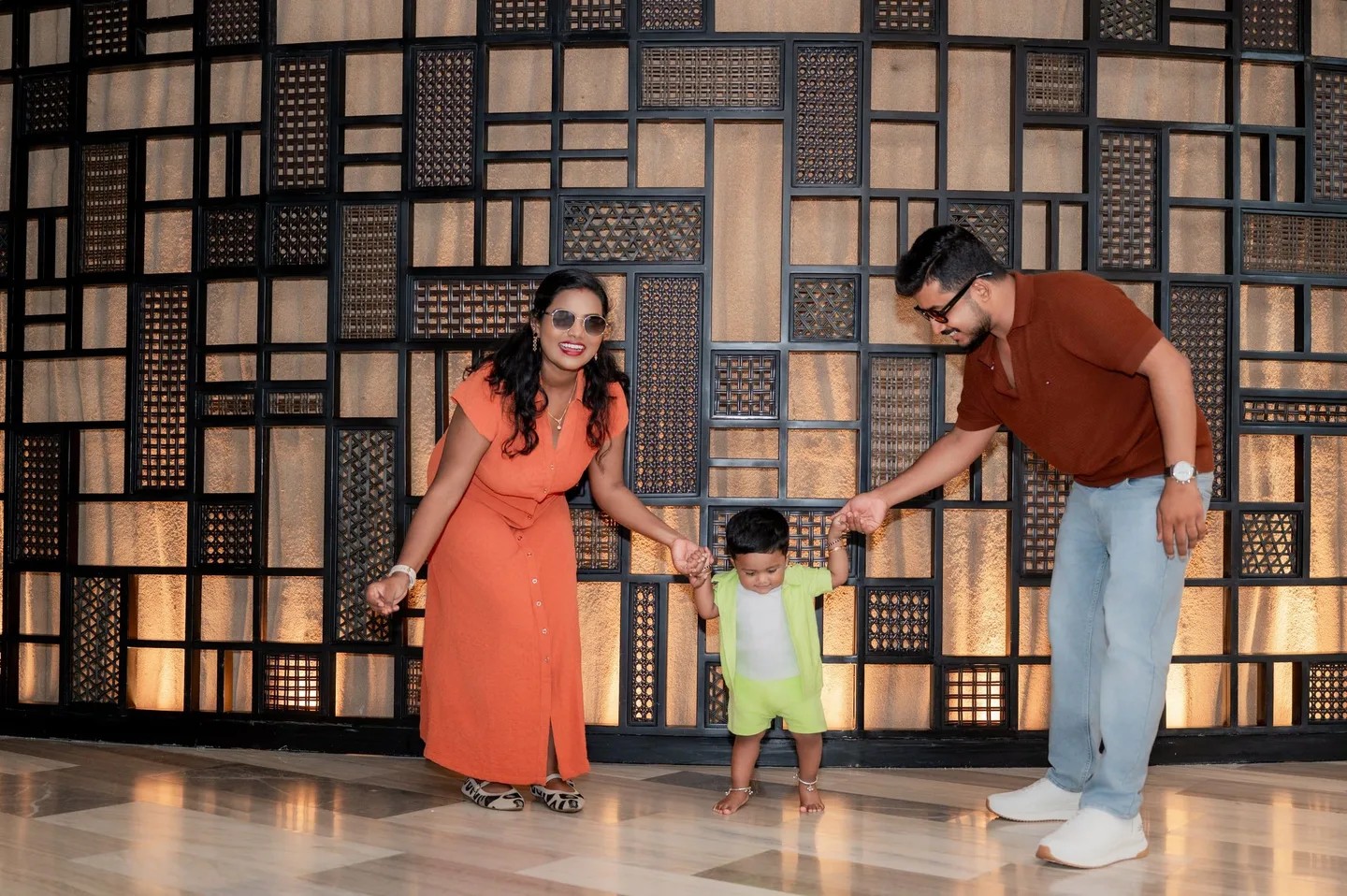
The opening indoor portrait shows a family in front of patterned screens. It illustrates a different portrait setting, but does not explain why the family was indoors or establish permission to use that room. Discuss the actual space, group size, available light and access before making it part of your alternative.
Keep storm shelter and coastal access separate from a portrait idea
If thunder is heard, stop the outdoor activity and move into a safe enclosed building or hard-topped enclosed vehicle. The US National Weather Service warns that open-sided beach shelters do not provide lightning protection and advises waiting at least 30 minutes after the last thunder before returning outdoors. Local warnings, venue restrictions and continuing unsafe conditions can require a longer change of plan.
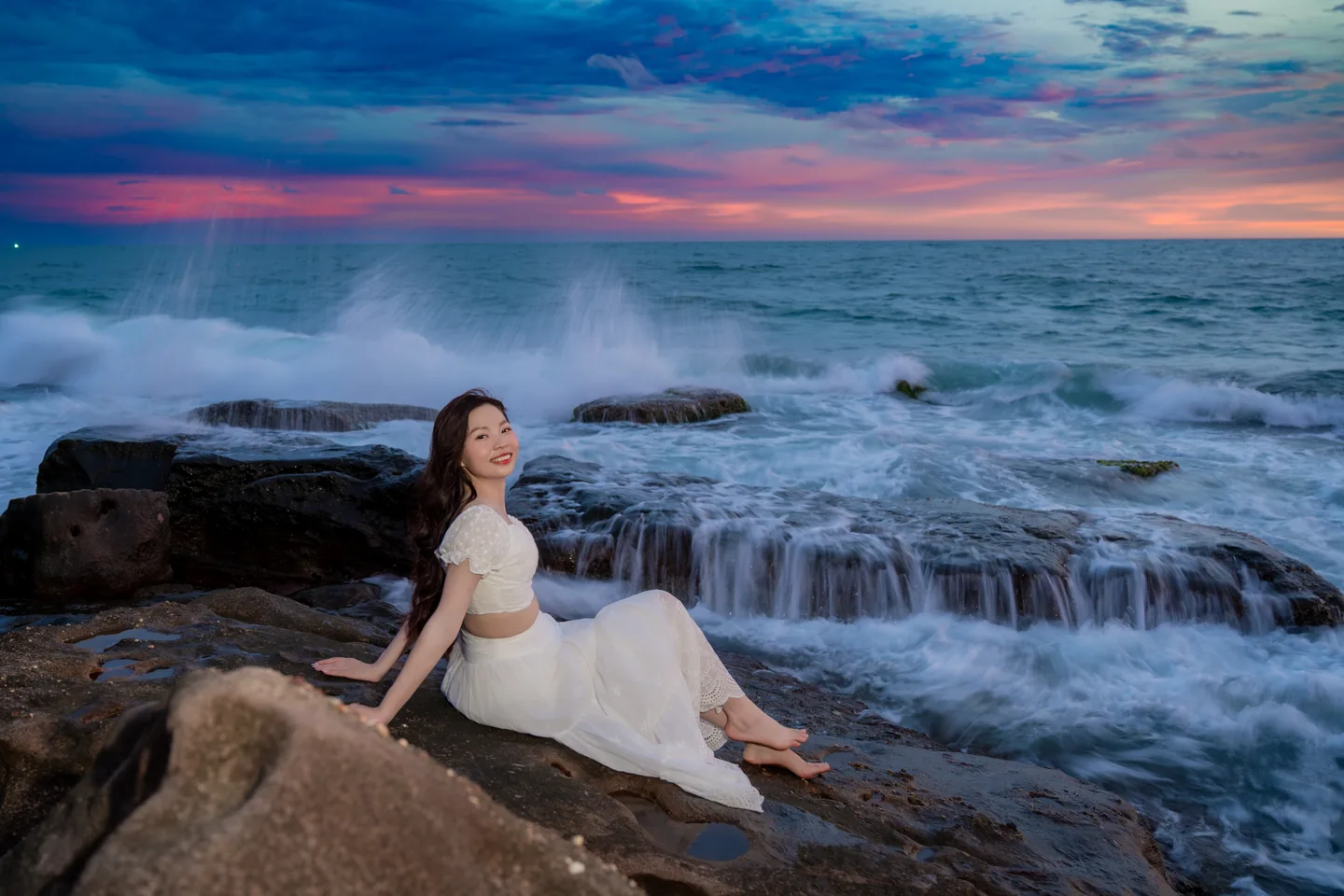
The coastal image below includes breaking waves and wet-looking rocks. It is a finished portrait, not a site assessment or a suggested place to wait out rain. Do not infer safe footing, water depth or an approved route from it. The actual shoreline and access conditions need assessment for the session; an attractive background is not a reason to continue an affected activity.
If a boat, shore transfer or restricted viewpoint is involved, include the responsible operator or venue in the discussion. Their access and operating decisions are separate from choosing a photography style. Moving to land or changing the route can also change the brief, so clarify the remaining plan once everyone is in a suitable place.
Discuss a different look without promising replacement weather
Cloud, a brighter sky or a different time of day can change the background, colour and way a portrait is arranged. Tell the photographer whether you would accept that difference. A daytime sea portrait and an evening coastal portrait can both be useful references, but neither establishes what the sky or water will look like on your date.
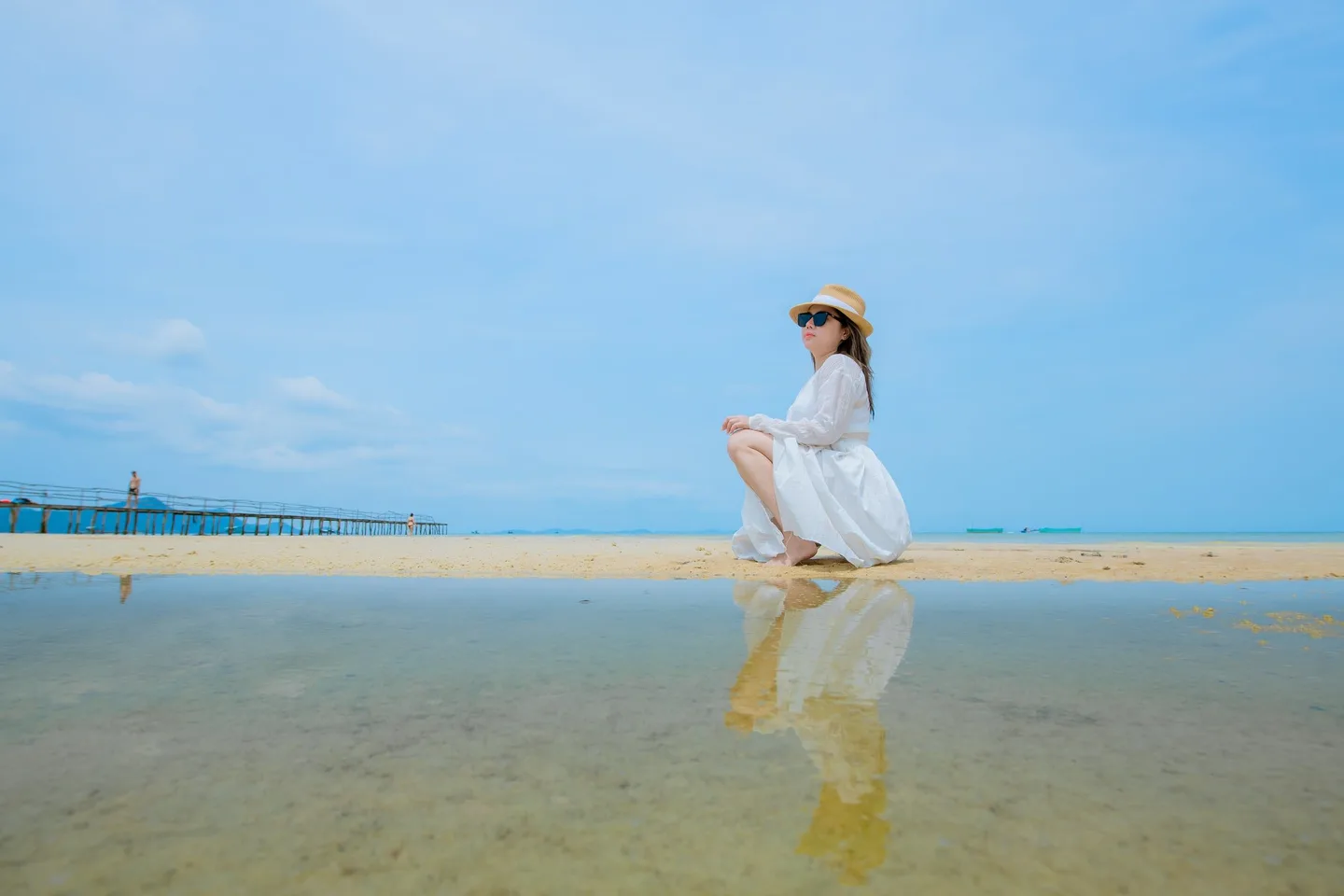
The daytime portrait below uses pale sand, shallow water and a reflection. It helps communicate a preference for light and framing, not a claim that a storm cleared. If a particular sky or setting is central to the brief, discuss which changes you would accept before treating another look as equivalent.
Editing should also be discussed in the original scope. Do not assume that the delivered selection will contain a replaced sky, removed rain or extensive changes to the setting. Explain the result you want and ask what is included, rather than relying on post-production to restore conditions that never occurred.
Record a revised arrangement and ask how payments will be handled
Read the booking policy with your written confirmation. Cloud alone does not automatically cancel a session or determine a refund. If the time, location or scope changes, ask the team to confirm the revised arrangement and explain any difference in price or approved supplier commitment before you decide.
Do not assume that asking to move a booking has already changed it. Ask for acknowledgement and written confirmation of the accepted alternative. If another date or setting is unavailable, discuss the next step under the applicable booking arrangement. This guide does not introduce a free reshoot, fixed weather fee or universal refund formula.
A flight, ferry or accommodation departure may leave no usable alternative date. Share those limits early and keep the relevant correspondence together. If the original plan cannot proceed, ask for a clear account of the service affected, the agreed next step and the treatment of payments and third-party commitments.
Send a short weather brief with your inquiry
You do not need to solve the weather before contacting a photographer. Share your preferred date, full travel window, accommodation area and the people joining. Mark flights, ferries, celebrations or other commitments that cannot move. A genuinely available alternative is more useful than a general statement that you are flexible.
Add what you want to keep about the photographs and which changes you would consider. Use the checklist to settle the contact and confirmation questions before the session. Once the plan is agreed, the companion experience guide explains the other stages from preparation to receiving the edited selection.
- Preferred date and the dates you can actually use as alternatives.
- Group, accommodation area and fixed travel or event commitments.
- The photographs and setting that matter most.
- Alternative settings you would consider, with access still to be checked.
- The booking contact, communication channel and next review point.
- How a revised scope, cost and written confirmation will be agreed.
Try the decision with a planning example
Imagine a family whose only flexible window is one afternoon. A next-day reshoot is not a realistic default if they leave early. Compare a different permitted setting with a possible time adjustment, asking what each preserves and whether the family accepts the changed result. Neither is automatically available. Keep safe shelter separate from a photogenic covered area, and record any agreed scope or cost change.
| Choice | Useful question |
|---|---|
| Another time | Are both parties available and is the place suitable? |
| Another setting | Is access approved and the changed look accepted? |
| Another date | Does it fit the travel window and booking terms? |
Research and references
Reference titles are shown in their original language.
- Existing holiday photography service and session boundaries
- Existing booking, weather changes and delivery policy
- Existing image usage and separate publicity permission
- Vietnam Tourism: Phu Quoc climate context
- National Center for Hydrometeorological Forecasting
- National Weather Service: outdoor and beach lightning safety
- Photographer booking page: qualitative session and package intent comparison