
Planning a Photography Timeline for Your Phu Quoc Resort Wedding
Build around the confirmed ceremony and guest programme, then make room for preparations, family photographs, portraits and changes between spaces.
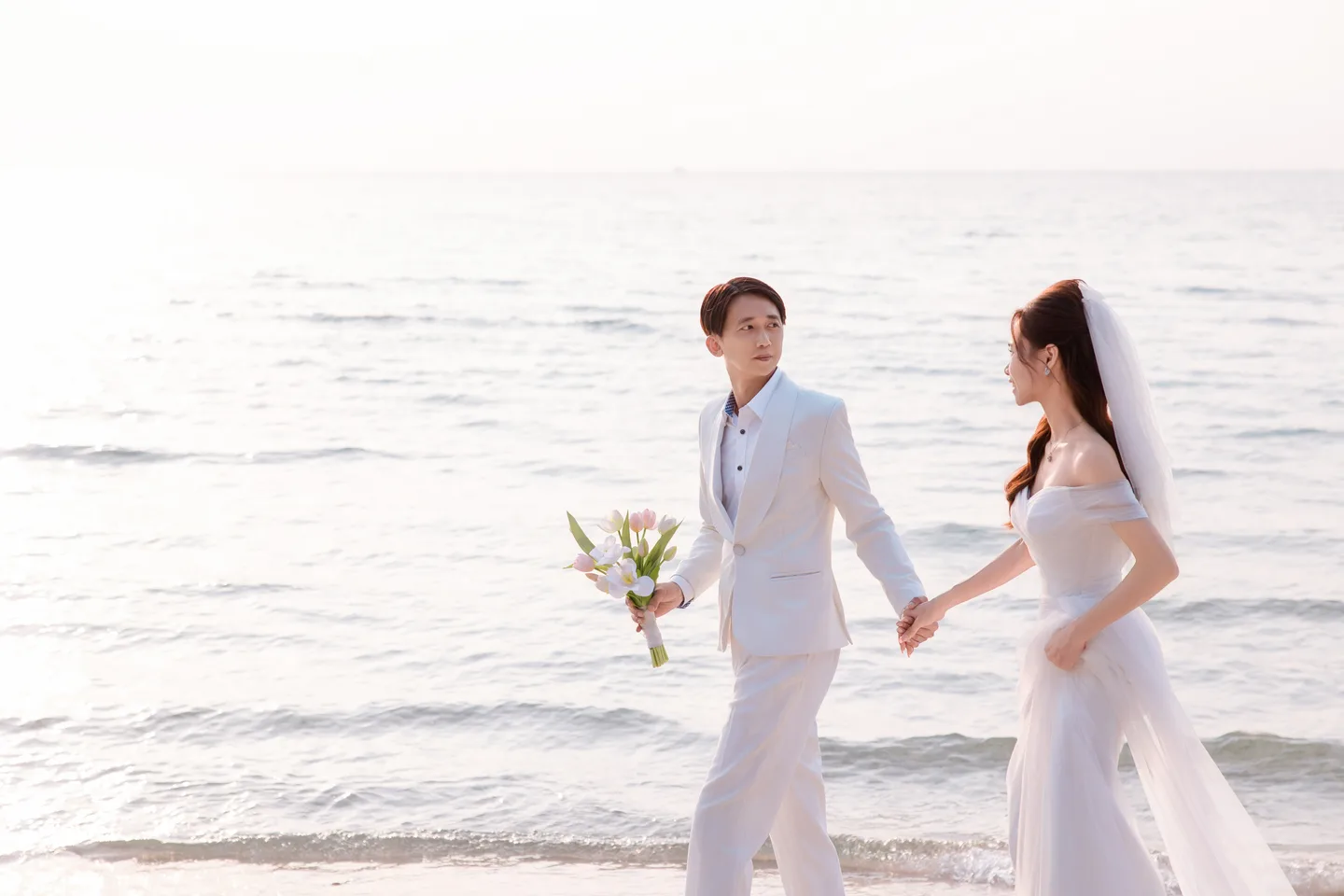
A wedding photography timeline connects several plans: when the couple will be ready, when the venue can provide each space, how the ceremony will unfold and when guests need to move on. Being in one resort can simplify the route, but it does not remove the time needed to gather people, reach the beach or reset for a different part of the day.
This guide provides a planning sequence and decisions to discuss with your photographer and wedding coordinator. It is not a fixed hourly package or a venue-approved timetable. The real images are planned pre-wedding portraits, not a record of a resort ceremony or reception; they illustrate portrait choices within a wider schedule.
Ready to compare the work and session options? Explore our Phu Quoc photographer page, then use this guide to prepare your questions.
Start with the times and spaces the venue has actually confirmed
Put the confirmed ceremony, guest arrival and reception commitments into the draft first. Ask which parts can move and which depend on the celebrant, venue team or another supplier. Identify the preparation rooms, ceremony area, portrait locations and reception space by their actual names rather than describing everything as at the resort.
Check access for the photographer and any separate film team, including arrival, equipment and restrictions during the ceremony. Ask the coordinator who can approve a space or schedule change. Official resort wedding pages describe different venue options, but they do not establish availability, photography permission or an automatic alternative for your particular booking.
Build a working sequence before assigning every clock time
Use the sequence below as a worksheet with your coordinator. Add actual times only after the people responsible for each dependency have reviewed it. The order can change with traditions, a first look or a different reception programme; it is a starting point for discussion, not a promise that every block fits your chosen coverage.
For every block, identify the people, exact place, readiness condition and next movement. Include the agreed photography start and endpoint in the finished run sheet. A list of beautiful moments without those practical links can hide the reason one delay affects several parts of the day.
Swipe horizontally to see all columns.
| Planning block | What must be ready | Decision to confirm |
|---|---|---|
| Preparations and details | People dressed or at the agreed preparation stage; relevant rooms and items accessible. | Who is photographed where, and what happens simultaneously. |
| Optional portraits before the ceremony | Both people ready and comfortable seeing each other; permitted portrait space. | Whether this suits your preferences and what remains for later. |
| Guest arrival and ceremony | Venue and celebrant ready; entry route and camera positions agreed. | Fixed ceremony cues and any restrictions. |
| Priority family groups | Requested people together, helper present and group location ready. | Which groups come first and where others wait. |
| Portraits together | A realistic window, a suitable setting and the route back to guests. | What can be shortened, moved or kept for another session. |
| Reception and evening priorities | Programme and supplier cues shared with the photography team. | Which later moments fall within the agreed coverage endpoint. |
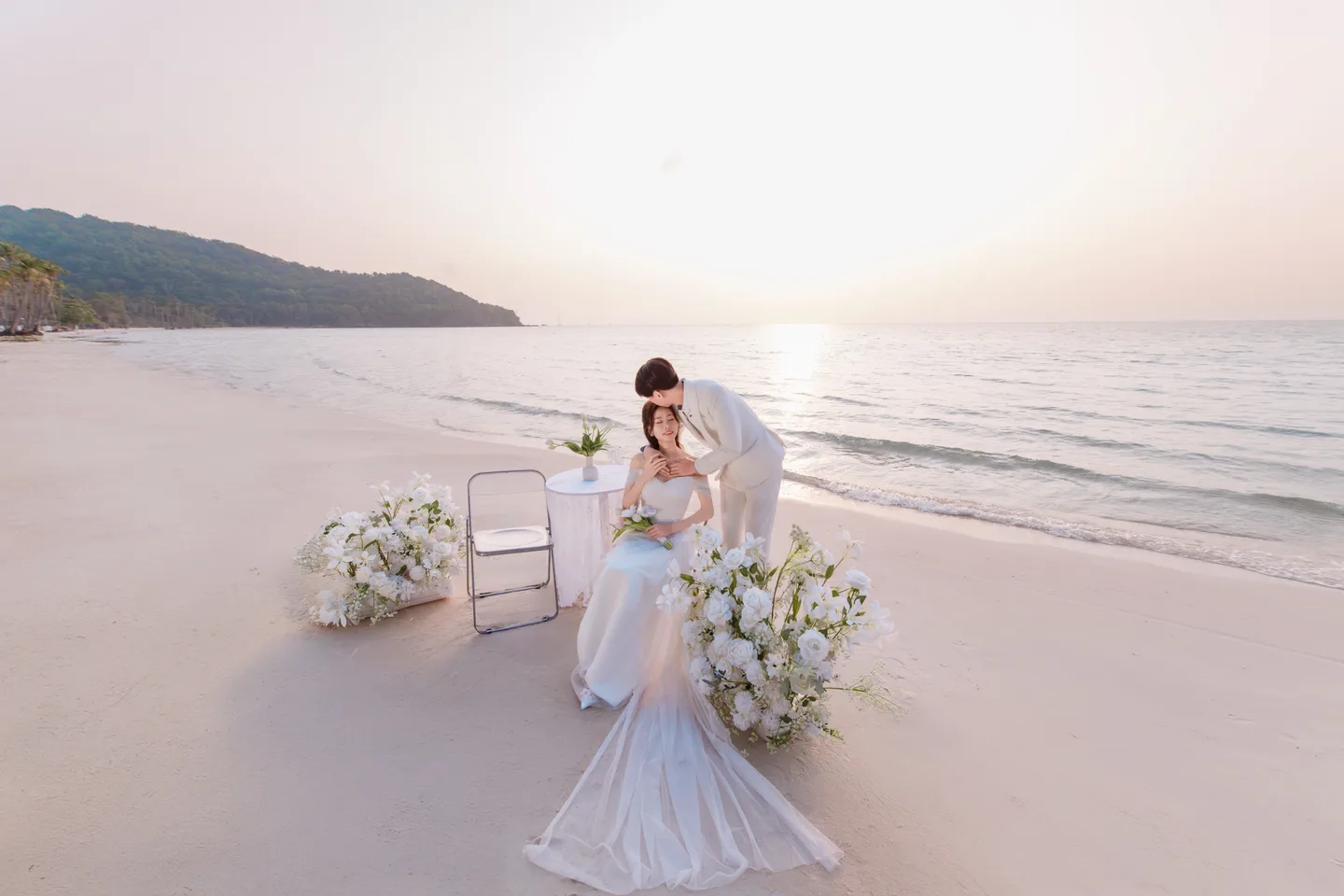
Work backwards through readiness, access and movement
From the ceremony anchor, work backwards through the couple’s readiness, any planned portraits and movement to the ceremony area. Ask the relevant suppliers when they need access and when the couple expects to be ready for photographs. If preparations happen in separate rooms, discuss what can be covered by the proposed team rather than assuming both locations can be followed at once.
Walk the practical route with the venue contact or ask for clear access information. A lobby, lift, buggy meeting point, garden path and beach entrance can all sit between two locations that appear close on a map. Include time for those movements, belongings and clothing adjustments, and make the route manageable for the people involved.
The opening shoreline portrait includes wedding clothing beside the waves. Use it to discuss footwear and the chosen stretch of sand, then check the actual route with the venue. The image does not establish the distance from a preparation room or the time needed to reach the water at a resort.
Choose where portraits belong without assuming one correct order
Decide together whether you want to see each other for portraits before the ceremony or keep that meeting for the ceremony itself. The decision affects readiness and the time available afterwards. Ask the photographer and coordinator to test your preference against the real programme instead of treating a first look as a requirement.
Use the comparison below to identify what each route depends on. You can also discuss a small portrait window within the wedding day and a separate pre-wedding or after-wedding session. A separate session needs its own scope and availability; it is not a guaranteed way to add missing coverage later.
| Portrait option | Planning consequence |
|---|---|
| Before the ceremony | Both people must be ready earlier, with permission for the setting and a route back before guest-facing commitments. |
| After the ceremony | Family groups, guest plans and the reception anchor share the available time with portraits. |
| Separate portrait session | The wedding-day schedule can prioritise live events, while another agreed session has its own preparation, date and deliverables. |
Give family photographs a gathering plan and a finish point
Share the priority combinations before the day and nominate someone who recognises the guests. Ask the coordinator where people should gather and how the rest of the guests will move towards the next activity. Listing several combinations is not the same as having everyone available at the chosen place.
Discuss which people need to be photographed first because of limited walking tolerance, rest needs or an early departure. Keep the portrait spot practical for them and avoid making essential family photographs depend on a distant beach viewpoint. Agree when the group list is complete so that portraits together do not expand by accident while guests wait.
- A named helper who can gather the right people.
- Priority group combinations with clear names or relationships.
- The exact meeting place and a workable route.
- Anyone who needs an earlier place in the order.
- A point where the group list ends and the next activity begins.
Plan for the photographs you want and an alternative that is usable
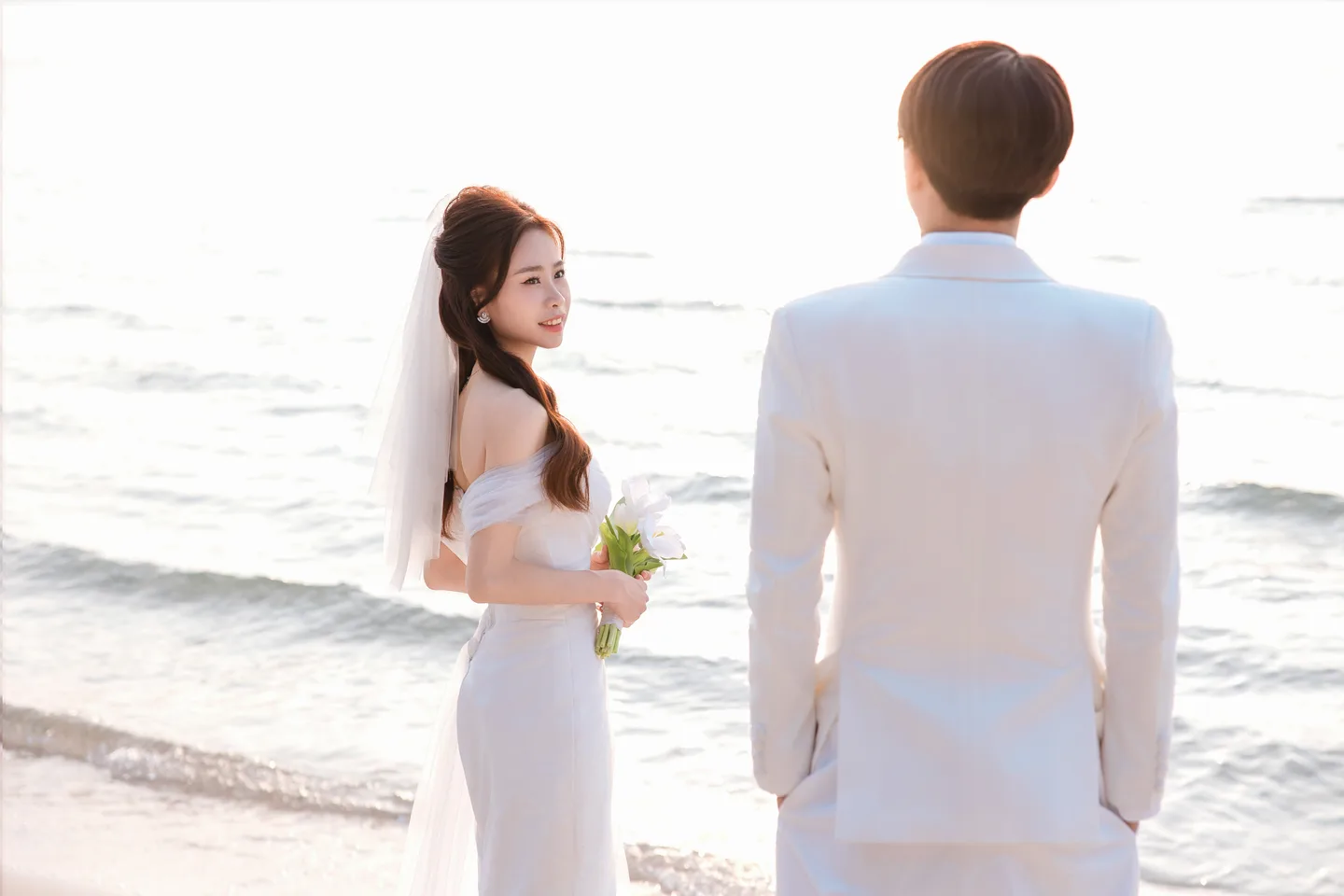
Tell the photographer if a sea view, softer light or a close portrait matters most. The quiet portrait below and the opening shoreline image show different amounts of setting and movement. Use them to explain priorities while reviewing the actual date, programme and access.
Agree who decides whether the outdoor plan changes, how that decision reaches the suppliers and what the alternative actually involves. A room or covered area must be available and approved for the intended use. Ask how a move affects the ceremony setup, guest movement and photography priorities rather than assuming that sheltered space solves every part of the plan.
Use your date, chosen venue and actual portrait location to review the light. A generic sunset time is not a substitute for checking the setting and programme. If the outdoor portrait window becomes unsuitable, agree which photographs can adapt and which might require a separately arranged session instead of promising every original image in a different place.
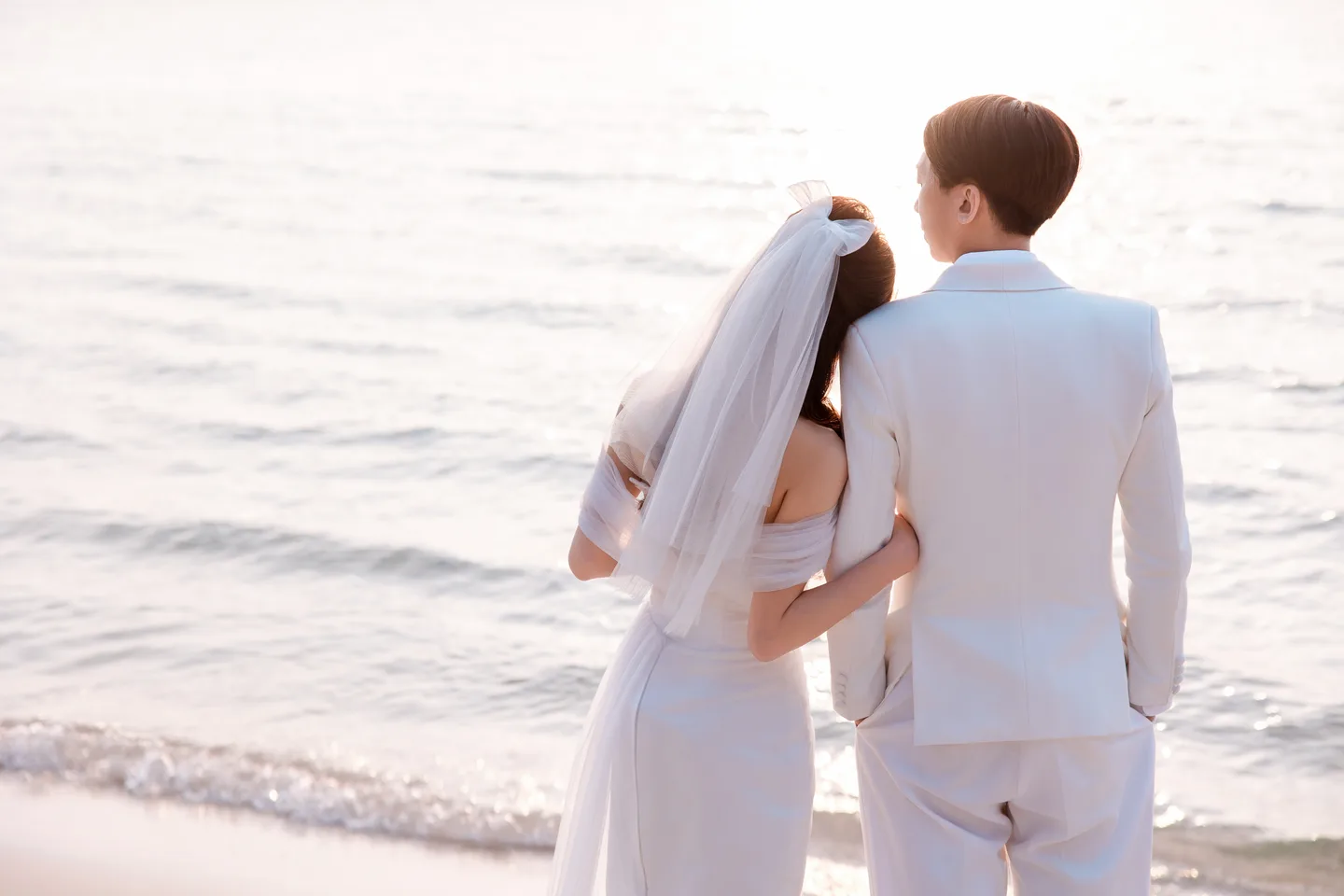
Protect the evening priorities and agree what happens when the day slips
Put entrances, speeches, dances and other important reception moments into the same programme the photographer receives. Identify who gives the cues and who can report an order change. If ceremony sound or speeches are part of a requested film, the film team also needs the relevant arrangements confirmed before the event.
Ask which priorities should be kept if preparations run late or the programme changes. Movement and readiness cannot simply disappear from the plan, so something may need to be shortened, moved or omitted. Identify who can approve that choice and any requested extension; extra coverage depends on availability and agreement rather than happening automatically.
Try the decision with a planning example
Suppose the ceremony ends later than planned. A ranked family list and a previously agreed simpler portrait location can support a useful discussion without moving every later event. The couple, photographer and coordinator should know which decisions are flexible and who approves a change. This is a hypothetical dependency check, not a resort run sheet or a promise of a particular number of minutes.
| Choice | Useful question |
|---|---|
| Preparation to ceremony | Who confirms people and spaces are ready? |
| Family to couple portraits | Which groups go first and who gathers them? |
| A delay | What may change before extending coverage? |
Research and references
Reference titles are shown in their original language.
- Existing wedding service specification and coverage boundaries
- InterContinental Phu Quoc: official wedding venue context
- JW Marriott Phu Quoc: official indoor and outdoor event-space context
- Pullman Phu Quoc: official ceremony and reception venue context
- Photographer wedding service: qualitative coverage and portrait-session comparison
- Vietnamese wedding-planning results: coordinator and timeline intent