
Phu Quoc Wedding Photography: What to Include in Your Coverage Brief
Explain the events, people and photographs that matter so your wedding photography proposal can reflect the day you are actually planning.
A wedding photography brief is a way to explain what matters before comparing coverage proposals. The ceremony, family photographs and reception may be only part of your day. Preparations in separate rooms, traditions, travel and a later celebration can all affect what the photographer needs to understand.
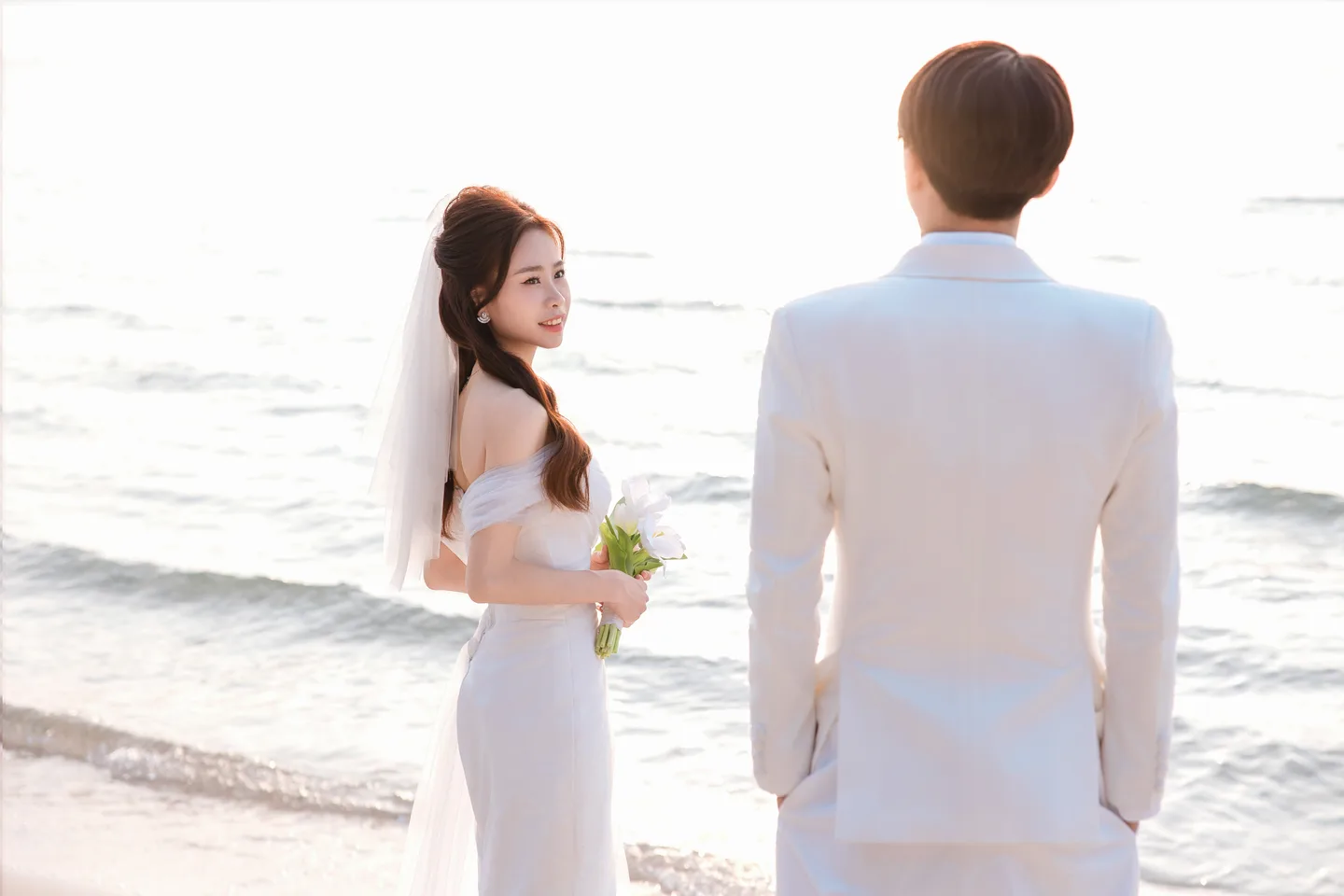
Use this guide to gather the decisions that shape coverage, even if your programme is still a draft. The photographs illustrate couple compositions, clothing and floral details. They are not presented as evidence of a live ceremony, reception or complete wedding-day story, and flowers alone do not identify the occasion of a session.
Ready to compare the work and session options? Explore our Phu Quoc photographer page, then use this guide to prepare your questions.
Separate wedding-day coverage from a planned portrait session
Start by saying whether you need photography of a live wedding, a pre-wedding portrait session or both. Recording an event that is unfolding is a different brief from arranging photographs in wedding clothes at a chosen setting. If you want a separate portrait day, identify it as its own session with its own date, route and requirements.
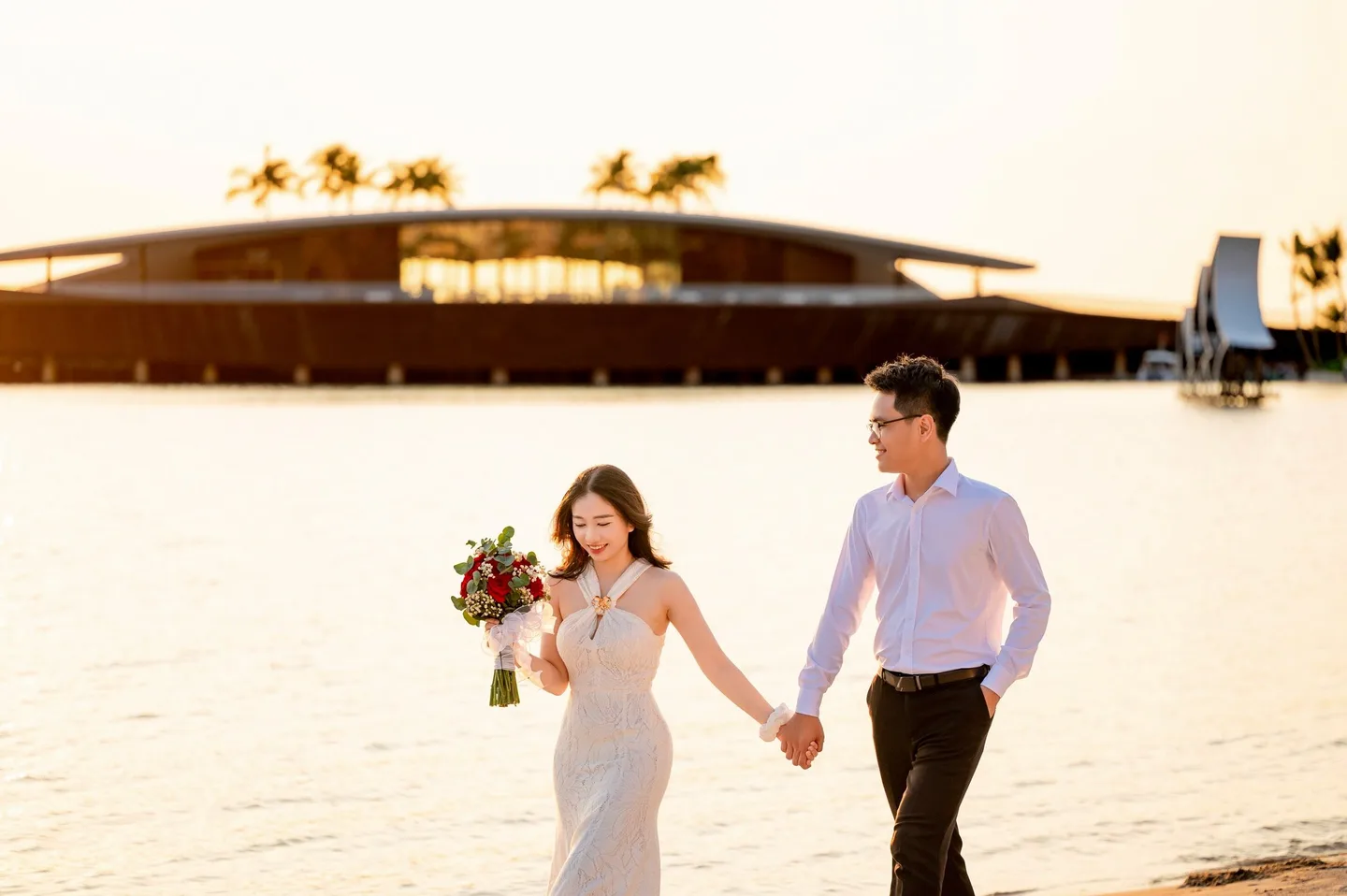
The opening photograph shows a couple with flowers beside the water. It can help communicate a portrait preference, but it does not show a live ceremony or establish the occasion of that particular session. Ask to review a relevant connected wedding-day selection when assessing preparations, ceremony, guest and reception coverage.
Map the events and say where coverage should begin and end
Send the wedding date, venue, approximate guest count and current programme. Include any preparation rooms, ceremony location, portrait area and reception space, even when they are within the same resort. Mark times that are confirmed separately from ideas that still depend on the venue or other suppliers.
Use the table to identify the parts you want covered. It is a briefing worksheet, not a list of automatic inclusions. Ask how the proposed start, finish, movement between places and any waiting periods are counted. If a late speech or planned exit matters to you, discuss it before choosing the coverage endpoint.
| Part of the day | Information the photographer needs |
|---|---|
| Preparations | People and rooms involved, when access is possible and which details or interactions matter. |
| Ceremony or traditions | Order, entrance, important rituals, restrictions and the person who can explain them. |
| Family and group portraits | Priority combinations, where everyone will gather and a helper who knows the guests. |
| Portraits together | The style you like, whether you will see each other beforehand and how it fits around guests. |
| Reception and later events | Entrances, speeches, dances or other priorities, with their place in the programme. |
| Additional days or locations | Separate events, travel, access and whether another coverage arrangement is needed. |
Identify the people and moments that a generic shot list will miss
Explain the relationships and traditions that matter to you. The photographer may not know which relative has travelled far, who should be included in a particular group or which ritual happens only once. Give that context in advance, and identify a coordinator or trusted guest who can help with names and gathering people.
Keep requested family combinations clear and manageable. List the people in each group, note anyone who needs to leave early and discuss a nearby place where they can wait comfortably. Share access needs and sensitive family arrangements discreetly with the relevant contact rather than relying on announcements during the celebration.
Priorities help the team plan attention; they do not guarantee every expression, guest or fleeting interaction. Ask how the photographer balances the formal list with observing what happens around it. A brief should make the people important to you visible without trying to turn the entire wedding into a sequence of posed instructions.
- Names or clear descriptions for the priority group combinations.
- Traditions and moments that need explanation before the day.
- Anyone with limited walking tolerance, rest needs or an early departure.
- A helper who knows the guests and can gather groups.
- Private preferences about who should not be photographed or publicly identified.
Describe the balance between portraits and time with guests
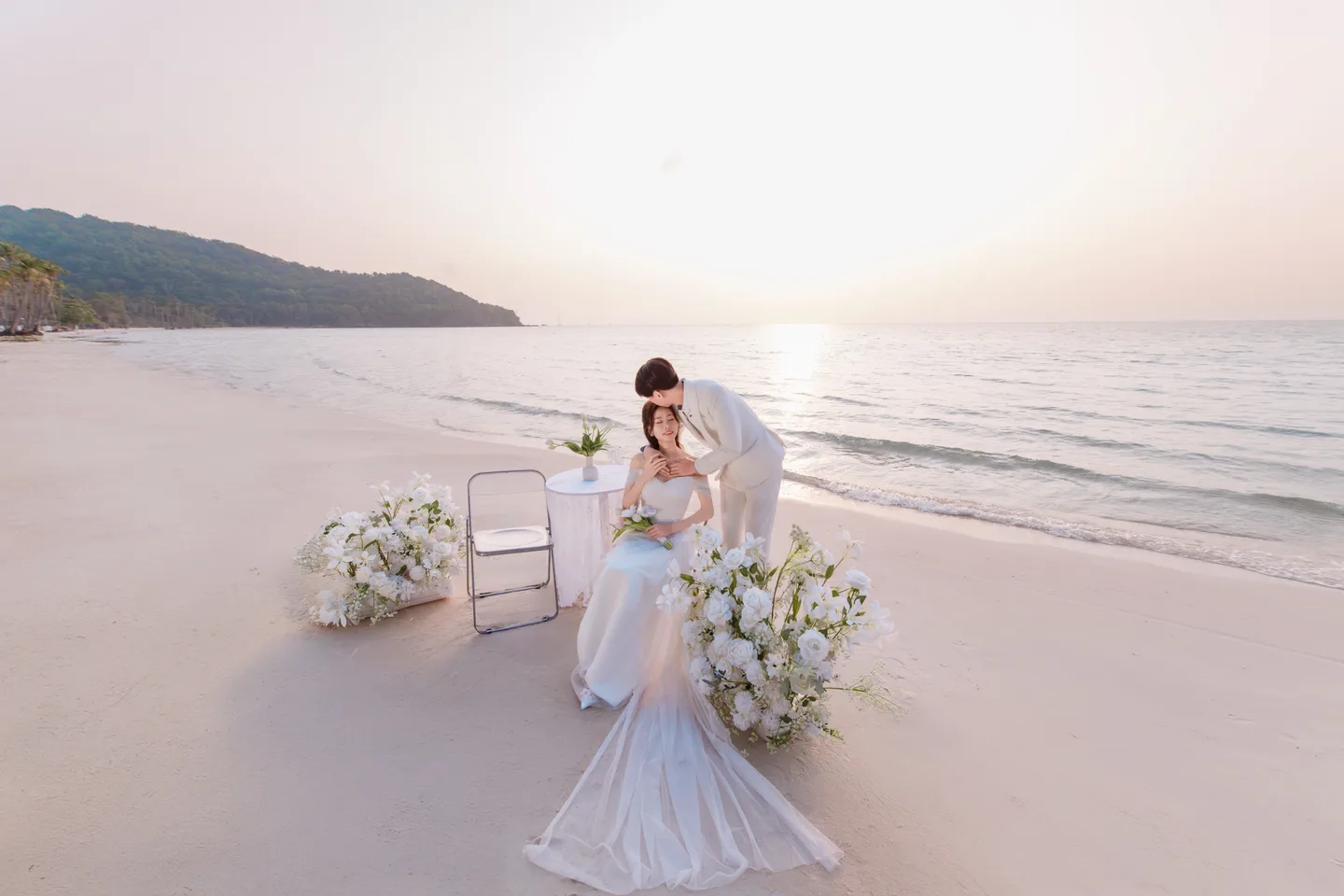
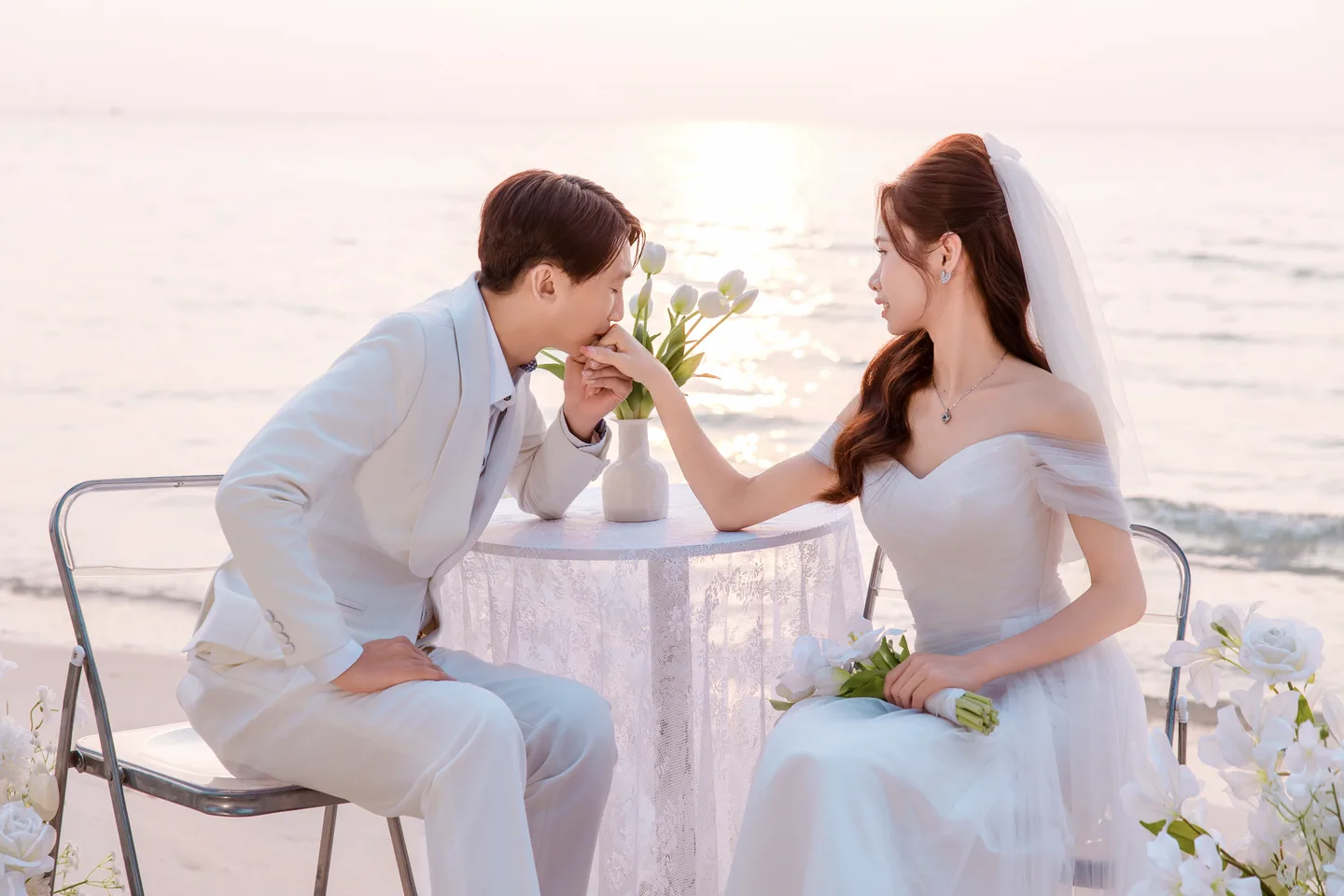
Think about the kind of portrait collection you want: a wider view of the setting, closer photographs together, movement or a mixture. The wide floral portrait below places the couple within the beach, furniture and flowers. A closer image asks a different question of the schedule and setting. Send a few references with a sentence explaining what appeals to you.
Then discuss when you are comfortable stepping away from guests. A planned portrait session before the ceremony, portraits after it or a separate day each has different implications. Your preferences and the venue programme should guide that choice; a dramatic background is not a reason to leave the rest of the day without a workable plan.
Flowers, furniture, clothing, makeup and exclusive space are separate arrangements unless specifically included in the written scope. The photograph shows a finished styled portrait, not what every wedding photography booking supplies. Name who arranges and approves those elements if they are part of your plans.
Share venue rules and explain events that happen at the same time
Ask the venue and celebrant about photographer positions, movement, flash, restricted areas and any outside-supplier requirements. Include arrival instructions and access to preparation rooms. A resort reservation does not by itself establish permission to photograph in every space, and a venue’s wedding offer does not establish the scope of your chosen photography service.
If preparations or events happen in different places at the same time, describe that clearly. Ask how the proposed team would cover those priorities and what must be chosen if they cannot all be followed. Additional photographers, videographers or aerial work are scope questions, not automatic solutions or standard inclusions.
Specify photography, film and delivery expectations separately
Say whether you want still photographs, film or both. If film matters, describe the intended result and whether ceremony sound, speeches, a longer edit or short versions are priorities. A photo gallery does not establish audio coverage or a particular film deliverable. Discuss how the teams will work within the ceremony rules and programme.
Before confirming, agree the edited image selection or quantity, selection process, editing scope, file formats, delivery method and expected dates. Ask about albums, prints, an early selection or additional edits if you need them. Raw files, every frame captured and same-day delivery should not be assumed from the phrase wedding coverage.
Clarify schedule changes and choices about sharing
Discuss what happens if preparations run late, an outdoor plan changes or the reception continues beyond the agreed coverage. Identify who can approve changes and ask how availability, cost and the remaining priorities will be handled. Coverage does not automatically extend because an important event moves later.
Read the booking conditions alongside the proposal, including any initial payment, date changes and cancellation arrangements. Agree personal-use terms and publicity permission separately. Tell the team about privacy preferences, announcement timing and any guest or child-image permissions that need attention before photographs are shared.
Send a useful first brief and mark what is still undecided
An inquiry can begin before every supplier and minute is final. Share what you know: date, venue, people, draft programme and the photographs you would most regret missing. State which times and locations remain provisional. A clear account of the open decisions is more useful than an apparently finished plan that still depends on unconfirmed access.
Include a venue or planner contact if they are already involved and explain who can approve the photography scope. Once the proposed coverage is clear, use the resort timeline guide to test how it fits around preparations, ceremony, portraits and the reception. Keep the latest agreed version available to the people coordinating the day.
- Date, venue and estimated guest count.
- Draft programme, locations and confirmed constraints.
- Coverage start and endpoint you would like to discuss.
- Priority people, traditions and group combinations.
- Portrait preferences and any separate pre-wedding session.
- Photography, film, delivery priorities and budget guidance if available.
- Venue or planner contact, approval lead and unresolved questions.
Try the decision with a planning example
Imagine preparations taking place in two separate rooms before one ceremony. Mark the simultaneous moments in the brief, then ask which are priorities and what staffing would be proposed. Do not solve the problem by promising every angle. Distinguish the commissioned story from optional portraits or a separate pre-wedding day. Once that scope is agreed, the timeline can sequence the real dependencies.
| Choice | Useful question |
|---|---|
| Simultaneous preparation | Which moments matter most and who covers them? |
| A separate portrait session | Is this a different date and commission? |
| Delivery | Which selection, formats and usage are agreed? |
Research and references
Reference titles are shown in their original language.
- Existing wedding service specification and coverage boundaries
- InterContinental Phu Quoc: official wedding venue context
- JW Marriott Phu Quoc: official indoor and outdoor event-space context
- Pullman Phu Quoc: official ceremony and reception venue context
- Photographer wedding service: qualitative coverage and portrait-session comparison
- Vietnamese wedding-planning results: coordinator and timeline intent